
Construction health
Construction hazards: respirable crystalline silica
Cutting and drilling concrete, stone and masonry can generate harmful dust. Understand the diseases, exposure figures, controls and enforcement lessons.
Construction hazards series. These articles cover OSHA’s four construction Focus Four categories plus respirable crystalline silica. They are five major hazards, not a universal statistical ranking. Statistics are labelled by year and scope; US requirements are identified as OSHA requirements.
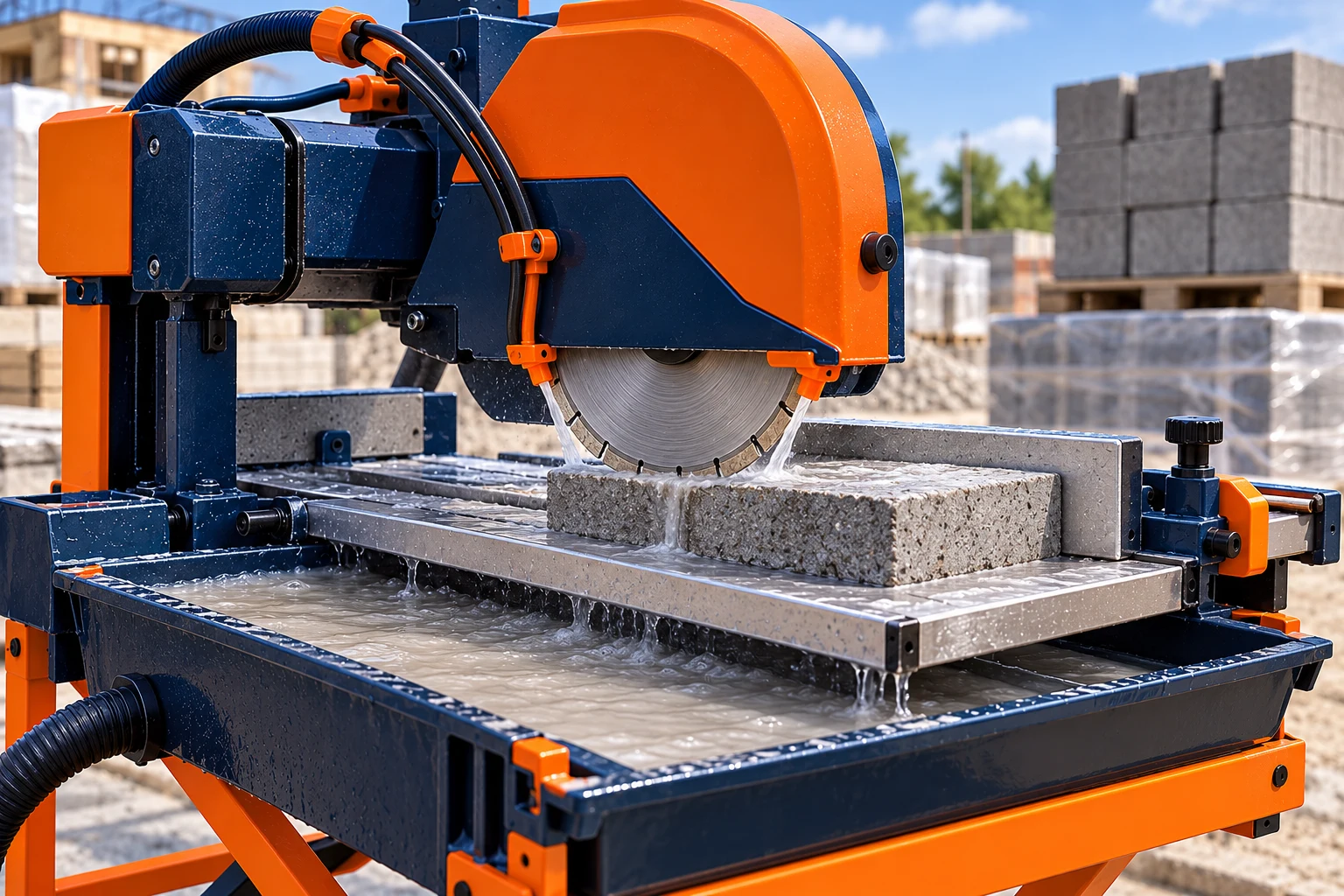
Cutting a concrete block or drilling a masonry wall can generate more than a visible housekeeping problem. OSHA identifies these activities as potential sources of respirable crystalline silica: very small particles that can be inhaled into the lungs. [1]
What is the hazard, and how can it harm people?
Crystalline silica occurs in materials including sand, stone, concrete and mortar. Cutting, sawing, grinding, drilling and crushing these materials can generate respirable particles. OSHA identifies increased risks of silicosis, lung cancer, chronic obstructive pulmonary disease and kidney disease among workers who inhale them. It describes silicosis as incurable and potentially disabling or fatal. [1]
This is an occupational-health exposure, rather than an acute accident category such as a fall. Its inclusion in this series should not be read as a claim that silica ranks fifth in construction fatal-injury statistics.
What do the statistics and exposure limits show?
The exposure estimate is not a count of diagnosed diseases, deaths or construction-only workers. It is also not labelled here as a new 2026 survey. [1]
For covered construction work, OSHA’s permissible exposure limit is 50 micrograms per cubic metre of air (50 µg/m³), averaged over an eight-hour workday. That is a regulatory exposure limit, not an epidemiological statistic or a universal international limit. [3]
Selected OSHA requirements: exposure and control duties
These are selected US federal construction silica provisions. The employer must establish which parts of the standard apply and whether the task is fully covered by Table 1 or follows the alternative exposure-control route.
| Issue | Requirement and scope | OSHA reference |
|---|---|---|
| Action level | 25 µg/m³ as an eight-hour TWA. Under the alternative exposure-control provisions, assess employees who are or may reasonably be expected to be exposed at or above it, using the permitted performance or scheduled-monitoring option. | 1926.1153(b), (d)(2) [3] |
| Permissible exposure limit | 50 µg/m³ as an eight-hour TWA. The action level and PEL are different. Neither is a visible-dust threshold. | 1926.1153(d)(1) [3] |
| Table 1 route | Fully and properly implement the engineering controls, work practices and respiratory protection specified for the relevant task. Respirator provisions can depend on task duration and indoor/enclosed conditions; there is no universal “no respirator needed when using water” rule. | 1926.1153(c) [3] |
| Housekeeping | Do not allow exposure-contributing dry sweeping/brushing unless the specified lower-exposure alternatives are infeasible. Compressed-air cleaning is restricted unless used with effective dust-cloud capture or no alternative is feasible. | 1926.1153(f)(1)–(2) [3] |
| Medical surveillance | Make medical surveillance available at no cost and at a reasonable time/place to employees required under this section to use a respirator for 30 or more days per year. This is not a blanket 30-day rule for every respirator user. | 1926.1153(h)(1) [3] |
Conditions that increase risk—and why
| Risk factor | How it changes the danger |
|---|---|
| Cutting, grinding or drilling silica-containing material | The work can create respirable particles from concrete, stone, brick or mortar. The material and actual operation determine whether this exposure route exists; appearance alone is not a material analysis. [1] |
| Insufficient water or ineffective dust capture | Dust can escape at the generation point. For Table 1 wet methods, OSHA specifies sufficient water flow to minimise visible-dust release; the applicable dust-collection equipment and work practices must also be followed in full. [3] |
| Indoor/enclosed work with inadequate exhaust | Dust can accumulate in the work area. Table 1 implementation includes providing exhaust as needed for indoor/enclosed tasks to minimise visible airborne-dust accumulation. Visible dust is an operational warning, not a substitute for the required exposure-control route. [3] |
| Longer tasks or repeated tasks during a shift | Duration changes the exposure pattern and can change the respiratory protection required by Table 1. For multiple Table 1 tasks, use the standard’s combined-duration provision rather than treating each task as an isolated short exposure. [3] |
| Dry sweeping, compressed air or poor access control | Settled dust can be made airborne again and other workers can enter the exposure area. OSHA addresses housekeeping restrictions and access procedures in the written exposure-control plan. [2] [3] |
Choose controls in hierarchy order
Sentivo’s hierarchy below combines OSHA’s general control principles with its construction silica provisions. The actual method must meet the applicable task and standard requirements. [2] [3] [4]
- Elimination: at design and procurement stages, assess whether the dust-generating site task can be avoided. For example, specifying components requiring no site cutting is a proposed application of OSHA’s design-led prevention principle. Do not claim that moving cutting elsewhere removes exposure for the people who perform it there. [4]
- Substitution: assess a suitable material or method that reduces the identified hazard, while checking new hazards. This is an application of OSHA’s general substitution approach, not a blanket statement that a particular alternative material is silica-free or safe. [4]
- Engineering and work-practice controls: use the water delivery or dust-collection controls specified for the relevant task, or the alternative exposure-control approach allowed by the standard. OSHA explains that applying water at the saw blade substantially reduces dust from cutting silica-containing materials. Table 1 must be followed in full for the applicable entry; “we used water” alone does not establish compliance. [2] [3]
- Administrative controls: implement the written exposure-control plan, designate the required competent person, train workers, restrict access where appropriate and follow the housekeeping provisions. Under the standard, dry sweeping or brushing is restricted where it could contribute to exposure, unless the specified alternatives are not feasible. [2] [3]
- Respiratory protection: provide it where required by Table 1 or the alternative exposure-control provisions, within the applicable respiratory-protection arrangements. A disposable mask of unknown suitability does not establish compliance. Engineering and work-practice controls remain central to the standard. [3]
Two documented enforcement examples
Setting matters: the following verified OSHA cases concern stone-product manufacturing and fabrication, not construction sites. They illustrate silica-control failures relevant to the building-material supply chain. They are not evidence of two construction-site accidents or of diagnosed silicosis. [5] [6]
1. Brazilian Stone Design LLC — Georgia
The release displays 10 July 2025, although its URL ends in 20250711. OSHA reported seven serious citations and stated that the countertop manufacturer would pay $33,000. Reported findings included high airborne silica concentrations and failures involving respirators, fit testing, training and air monitoring. The total also covers a hearing-conservation finding; it is not a silica-only penalty. [5]
2. Art Stone-Granite & Marble Inc. — Georgia
OSHA’s 14 May 2025 release describes two repeat and 13 serious violations involving protections for silica and occupational noise. The release states that the company would pay $120,000, correct conditions and take steps against recurrence. This is the payment wording in that release, rather than an assertion that the penalty was newly proposed. [6]
Case summaries describe what OSHA reported at publication. Proposed penalties and contested citations are not final court findings; subsequent case status has not been verified. Images are conceptual illustrations, not photographs of these events.
Check the control at the task
For a cutting or drilling operation, Sentivo proposes verifying the material, the applicable task-control route, the condition and operation of water or extraction equipment, and any required respiratory arrangements before work starts. Review the evidence against the actual standard rather than judging exposure from the photograph or visible dust alone. [2] [3] [4]
Sources
References were checked on 31 October 2026. Numbered links connect factual claims to these sources. Examples, checklists and proposed applications identified as Sentivo’s are editorial recommendations; they are not quoted requirements or claims of proven results.
- OSHA. Silica, Crystalline — Overview. (opens in a new tab)Sources of respirable silica, approximately 2.3 million exposed US workers and associated diseases; estimate has no stated reporting year.
- OSHA. Silica, Crystalline — Construction. (opens in a new tab)Table 1 or alternative exposure-control approach, water suppression, written plans, competent person and other duties.
- OSHA. 29 CFR 1926.1153 — Respirable crystalline silica. (opens in a new tab)50 µg/m³ eight-hour PEL, Table 1, engineering/work-practice controls, housekeeping and respiratory requirements.
- OSHA. Hazard Prevention and Control. (opens in a new tab)Elimination, substitution, engineering, administration and PPE selection and verification.
- OSHA. Brazilian Stone Design silica enforcement release, displayed date 10 July 2025. (opens in a new tab)Seven serious citations, airborne silica and respiratory/monitoring findings, $33,000 to be paid; stone fabrication setting.
- OSHA. Art Stone-Granite & Marble silica enforcement release, 14 May 2025. (opens in a new tab)Two repeat and 13 serious violations, silica/noise protections and $120,000 to be paid; manufacturing setting.
- OSHA. Construction Focus Four Training. (opens in a new tab)The four acute hazard categories; silica is an additional health topic in this series.
- OSHA. 29 CFR 1926.702 — Requirements for equipment and tools, subsection (i). (opens in a new tab)Masonry-saw blade enclosure requirements; used in the image review.